

Courtesy
/
Jorge Luis García Ruiz
Historian Jorge Luis García Ruiz discusses the lesser-known contributions of Spain to the American cause during the 18th-century war.
-
 No other phenomenon has shaped human history as decisively as capitalism. It structures how we live and work, how we think about ourselves and others, how we organize our politics. But is capitalism what you think it is? It's rooted in the ideas of private property, self-interest and profit — but it is dependent on the rule of law and state support. We hear the story of capitalism.
 -
 Millions of Texans tell pollsters religion is very important in their lives. Every Sunday hundreds of megachurches fill up and celebrate their faith – which also shapes their politics. The result , elections are won and lost based on performances of righteousness. The State Board of Education bends the nation’s textbooks to a conservative Lone Star gospel, and laws are passed based on Christian values. How did Texas become “one state under God"?
 -
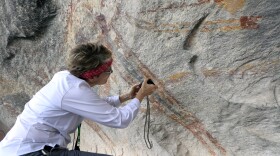 Archeologist Carolyn Boyd discusses recent discoveries made at the Pecos River-style mural site on the Texas-Mexico border near Del Rio.
 -
An unveiling ceremony was held on Wednesday recognizing the significant contributions of San Antonio Lodge No.1, the first Masonic Lodge for African Americans in Texas.
-
 Today on Texas Matters: The old Spanish missions of San Antonio — 300 years of history, community memory and meaning. Joel Daniel Kitchens is the author of “San Antonio and Its Missions: Three Centuries of History, Memory and Heritage.”
 -
 The Mexican American Civil Rights Institute in San Antonio presents the story of William Merriweather Peña with a new exhibit.
 -
 Recently the slavery exhibit was removed at Independence National Historical Park, The Pride flag was removed at Stonewall National Monument and at the Smithsonian references to President Trumps impeachments were taken down. We hear from Jason Stanley, the author of “Erasing History – How Fascists rewrite the Past to Control the Future.”
 -
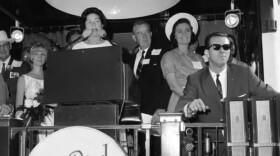 In 1964, the United States was deeply divided. There was a backdrop of fear and grief. The nation was still reeling from the assassination of John F. Kennedy. The Cold War was raging. The Civil Rights Act had become law. And there was a presidential election. And in the middle of the moment was First Lady, Lady Bird Johnson.
 -
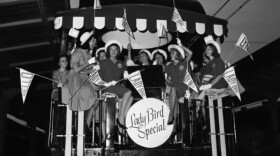 In October 1964, as the South simmered under the tensions following the signing of the Civil Rights Act three months earlier, First Lady, Lady Bird Johnson, began a whistle-stop tour of the South. She shattered the expectations of a presidential spouse with speeches, diplomacy, and palpable compassion as she encouraged the South to leave Jim Crow behind.
 -
 The parade featured a cattle drive, mounted infantry groups, authentic wagons, and heritage organizations.


