
Amplify Your Brand Using Nature Technology Insights
Are you ready to showcase your technology to a highly engaged audience of scientists and researchers? Join us in advancing scientific discovery by advertising in Nature Technology Features.
Enhance your brand visibility, engage with key decision-makers, and become a part of the technology that drives innovation.

Book Your Spot
- Decide which of our topics you want to advertise against — view the topics below.
- Choose whether to run display advertising and/or branded content.
- Display ads build critical awareness of your research, products, or events.
- Branded content uses compelling storytelling to engage Nature audiences with your message. Your article can be written by our award-winning custom media team or supplied by your organization.
- Book with us before the booking deadlines detailed in the calendar below.

What Are Nature Technology Features?
Nature Technology Features are editorially independent sections, spotlighting scientists and the technologies they choose. Each feature provides essential insights that can be readily implemented in laboratories around the world, making it the perfect platform for your brand to shine.
Why Advertise with Us?
- Targeted Reach: Access a global community of scientists who are eager to discover the latest technology and methods in their field.
- Prestigious Platform: Your brand will be featured alongside Nature’s influential content, enhancing your credibility and visibility in the industry.
- Expertly Crafted Content: Our award-winning custom media team will create compelling branded content that highlights the benefits and applications of your technology and products
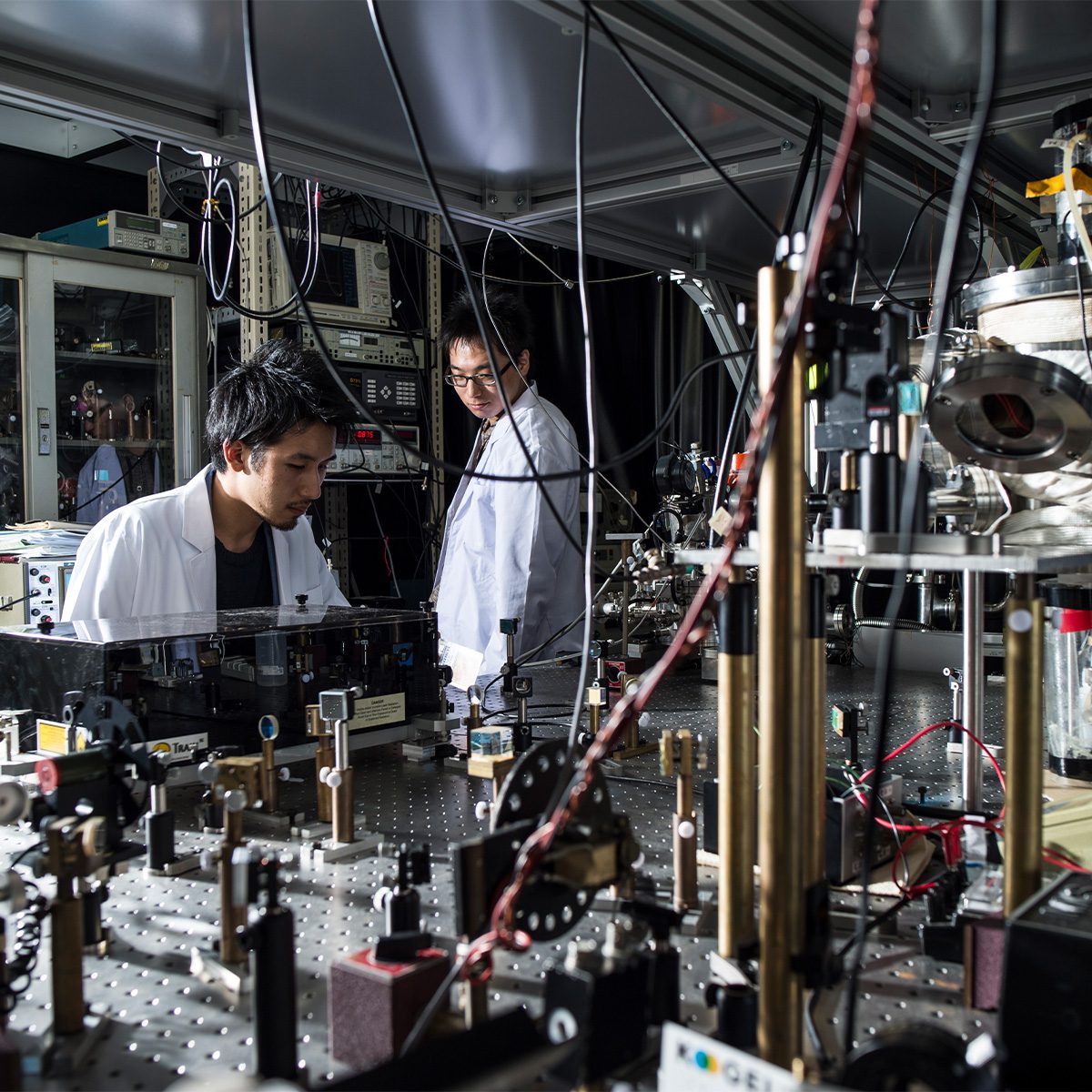
2026 Nature Technology features calendar:
View the topics in more detail.
| Publication date in 2026 | Nature Technology topic | Booking deadline for branded content (Print and Online) | Booking deadline for branded content (online only) | Booking deadline for advertiser-supplied branded content | Booking deadline for display ad (submission of PDF) |
|---|---|---|---|---|---|
| 22 January | Technologies to Watch | ONLINE ONLY | 24 October 2025 | N/A | |
| 19 March | PhD survey/AI | ONLINE ONLY | 18 December 2025 | N/A | |
| 2 April | Self-driving labs | ONLINE ONLY | 16 January 2026 | N/A | |
| 7 May | MPRAs | ONLINE ONLY | 16 February 2026 | N/A | |
| 21 May | Antibiotic discovery/AI | ONLINE ONLY | 27 February 2026 | N/A | |
| 4 June | Virtual cells/systems biology/PhysiCell (Fertig) | ONLINE ONLY | 13 March 2026 | N/A | |
| 16 July | Epigenome editing (ie, CRISPR and variants) | ONLINE ONLY | 27 April 2026 | N/A | |
| 30 July | What can’t we do with genome editors? | ONLINE ONLY | 15 May 2026 | N/A | |
| 8 October | Cell-free protein expression | ONLINE ONLY | 29 July 2026 | N/A |
-
PhD survey/AI (19 March)
This article is an AI-focused follow-up to the PhD survey Careers features, about how PhD students are and are not using AI and their preferred tools. Basically, everyone is using AI, but nobody trusts it.
-
Self-driving labs (2 April)
’Self-driving labs’ are autonomous labs in which a combination of artificial intelligence and automation drive research forward without human intervention. The author will be visiting one such lab in Sweden to report on what these labs look like, how they work, what they can and cannot do, and how researchers can work with them.
-
MPRAs (7 May)
MPRAs, or ‘massively parallel reporter assays’, are used to measure the gene-regulatory activity of a vast number of DNA sequences at once. Among other things, MPRAs provide the data to inform ‘genome AI’ systems that can ‘dream up’ new sequences with a desired activity (for instance, new regulatory DNAs that function in a particular cell type for gene therapy applications. see https://www.nature.com/articles/d41586-025-02621-8). They have other applications too, and our author will be focusing on those as well.
-
Antibiotic discovery/AI (21 May)
How artificial intelligence is being used to for antibiotic discovery. There are basically two ways to do this: 1) using AI to infer from genome sequences what metabolites an organism might be capable of synthesizing, then creating and testing those; or 2) using AI to imagine entirely new molecules.
-
Virtual cells / systems biology / PhysiCell (Fertig) (4 June)
Virtual cells, ie detailed computer/AI simulations of how cells work. Basically, a series of mathematical models that in total describe some or all of a particular biochemical process. This article will focus on what these are, how they work, what people might do with them, and their status. (The Chan-Zuckerberg Initiative is pouring money into this at the moment.) Among other things, this relates to tools for collecting cellular ‘perturbation’ data, such as “Perturb-seq” — if you want to know how a system works, you have to systematically break it in different ways and see how the system reacts.
-
Epigenome editing (16 July)
We all know about genome editing systems like CRISPR/Cas. Epigenome editing uses variants of these systems not to change DNA sequence but rather how they are chemically modified in the cell. These modifications (such as methylation or acetylation) change how the DNA is read in the cell — that is, they can influence whether a gene is expressed or not, regardless of its sequence.
-
What can’t we do with genome editors? (30 July)
Genome editing tools such as Prime editing and base editors are based on the popular CRISPR-Cas9 gene-editing system. But Cas9 creates double-stranded breaks in DNA that complicate the editing process — sometimes those breaks are corrected using a mechanism that can introduce mutations instead of the desired change. In contrast, prime editing and base editing tools alter the sequence of DNA without these damaging breaks. They look especially promising for human gene therapy and related applications, where precise genome modifications are required. But for all their nimbleness, these editors (and other editing approaches) still cannot do everything. In this feature, we look at the different approaches and consider what they can and cannot do, and what technological gaps researchers still hope to close.
-
Cell-free protein expression (8 October)
Cell-free protein expression’ refers to systems that allow researchers to express a given protein using either crude cellular extracts or by mixing purified proteins. This has applications for biomanufacturing, because it allows researchers to control the environment in which, say, biopharmaceuticals are synthesized. (As opposed to, say, producing them inside cells, from which the desired material must them be purified.)
Get Started Today!
Contact us now to learn more about advertising opportunities and how you can make a lasting impact in the scientific community. Your journey to reach the right audience starts here!
Advertise in Nature Technology features in 2026
"*" indicates required fields
