# æŽ’åº ## å¸¸è€ƒæŽ’åº ### å¿«é€ŸæŽ’åº ```Python import random def partition(nums, left, right): if left >= right: return pivot_idx = random.randint(left, right) pivot = nums[pivot_idx] nums[right], nums[pivot_idx] = nums[pivot_idx], nums[right] partition_idx = left for i in range(left, right): if nums[i] < pivot: nums[partition_idx], nums[i] = nums[i], nums[partition_idx] partition_idx += 1 nums[right], nums[partition_idx] = nums[partition_idx], nums[right] partition(nums, partition_idx + 1, right) partition(nums, left, partition_idx - 1) return def quicksort(A): partition(A, 0, len(A) - 1) return A if __name__ == '__main__': a = [7, 6, 8, 5, 2, 1, 3, 4, 0, 9, 10] print(a) print(quicksort(a)) ``` ### å½’å¹¶æŽ’åº ```Python def merge(A, B): C = [] i, j = 0, 0 while i < len(A) and j < len(B): if A[i] <= B[j]: C.append(A[i]) i += 1 else: C.append(B[j]) j += 1 if i < len(A): C += A[i:] if j < len(B): C += B[j:] return C def mergsort(A): n = len(A) if n < 2: return A[:] left = mergsort(A[:n // 2]) right = mergsort(A[n // 2:]) return merge(left, right) if __name__ == '__main__': a = [7, 6, 8, 5, 2, 1, 3, 4, 0, 9, 10] print(a) print(mergsort(a)) ``` ### å †æŽ’åº ç”¨æ•°ç»„è¡¨ç¤ºçš„å®Œç¾ŽäºŒå‰æ ‘ complete binary tree > 完美二å‰æ ‘ VS 其他二å‰æ ‘ 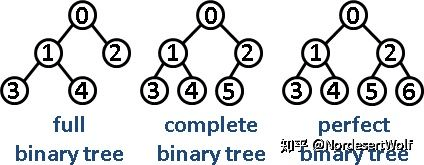 [动画展示](https://www.bilibili.com/video/av18980178/) 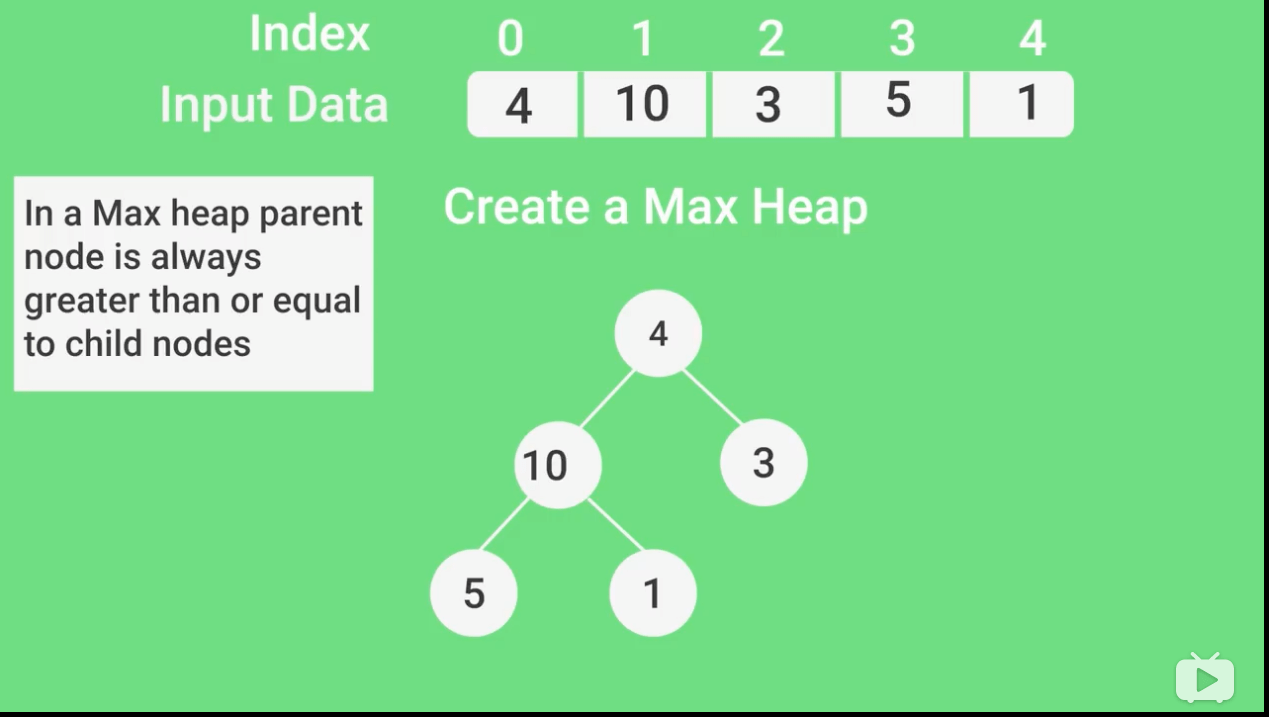 æ ¸å¿ƒä»£ç ```Python def heap_adjust(A, start=0, end=None): if end is None: end = len(A) while start is not None and start < end // 2: l, r = start * 2 + 1, start * 2 + 2 swap = None if A[l] > A[start]: swap = l if r < end and A[r] > A[start] and (swap is None or A[r] > A[l]): swap = r if swap is not None: A[start], A[swap] = A[swap], A[start] start = swap return def heapsort(A): # construct max heap n = len(A) for i in range(n // 2 - 1, -1, -1): heap_adjust(A, i) # sort for i in range(n - 1, 0, -1): A[0], A[i] = A[i], A[0] heap_adjust(A, end=i) return A # test if __name__ == '__main__': a = [7, 6, 8, 5, 2, 1, 3, 4, 0, 9, 10] print(a) print(heapsort(a)) ``` ## 题目 ### [kth-largest-element-in-an-array](https://leetcode-cn.com/problems/kth-largest-element-in-an-array/) - æ€è·¯ 1: sort åŽå–第 k 个,最简å•ç›´æŽ¥ï¼Œå¤æ‚度 O(N log N) 代ç ç•¥ - æ€è·¯ 2: 使用最å°å †ï¼Œå¤æ‚度 O(N log k) ```Python class Solution: def findKthLargest(self, nums: List[int], k: int) -> int: # note that in practice there is a more efficient python build-in function heapq.nlargest(k, nums) min_heap = [] for num in nums: if len(min_heap) < k: heapq.heappush(min_heap, num) else: if num > min_heap[0]: heapq.heappushpop(min_heap, num) return min_heap[0] ``` - æ€è·¯ 3: [Quick select](https://en.wikipedia.org/wiki/Quickselect),方å¼ç±»ä¼¼äºŽå¿«æŽ’,æ¯æ¬¡ partition åŽæ£€æŸ¥ pivot 是å¦ä¸ºç¬¬ k ä¸ªå…ƒç´ ï¼Œå¦‚æžœæ˜¯åˆ™ç›´æŽ¥è¿”å›žï¼Œå¦‚æžœæ¯” k å¤§ï¼Œåˆ™ç»§ç» partition å°äºŽ pivot çš„å…ƒç´ ï¼Œå¦‚æžœæ¯” k å°åˆ™ç»§ç» partition 大于 pivot çš„å…ƒç´ ã€‚ç›¸è¾ƒäºŽå¿«æŽ’ï¼Œquick select æ¯æ¬¡åªéœ€ partition ä¸€ä¾§ï¼Œå› æ¤å¹³å‡å¤æ‚度为 O(N)。 ```Python class Solution: def findKthLargest(self, nums: List[int], k: int) -> int: k -= 1 # 0-based index def partition(left, right): pivot_idx = random.randint(left, right) pivot = nums[pivot_idx] nums[right], nums[pivot_idx] = nums[pivot_idx], nums[right] partition_idx = left for i in range(left, right): if nums[i] > pivot: nums[partition_idx], nums[i] = nums[i], nums[partition_idx] partition_idx += 1 nums[right], nums[partition_idx] = nums[partition_idx], nums[right] return partition_idx left, right = 0, len(nums) - 1 while True: partition_idx = partition(left, right) if partition_idx == k: return nums[k] elif partition_idx < k: left = partition_idx + 1 else: right = partition_idx - 1 ``` ## å‚考 [å大ç»å…¸æŽ’åº](https://www.cnblogs.com/onepixel/p/7674659.html) [二å‰å †](https://labuladong.gitbook.io/algo/shu-ju-jie-gou-xi-lie/er-cha-dui-xiang-jie-shi-xian-you-xian-ji-dui-lie) ## ç»ƒä¹ - [ ] 手写快排ã€å½’并ã€å †æŽ’åº