  package sklearn
  sklearn.cluster.AgglomerativeClustering
  sklearn.cluster.FeatureAgglomeration
  sklearn.model_selection.GridSearchCV
  sklearn.model_selection.RandomizedSearchCV
  sklearn.model_selection.ParameterGrid
  sklearn.model_selection.ParameterSampler
  sklearn.model_selection.fit_grid_point
### 层次聚类
**层次聚类**:一层一层地进行聚类,可以**从下而上地把小的cluster合并聚集**,也可以从上而下地将大的cluster进行分割。一般用得比较多的是从下而上地聚集。具体而言,就是每次找到距离最短的两个cluster,然后进行合并成一个大的cluster,直到全部合并为一个cluster。整个过程就是建立一个**树结构**。
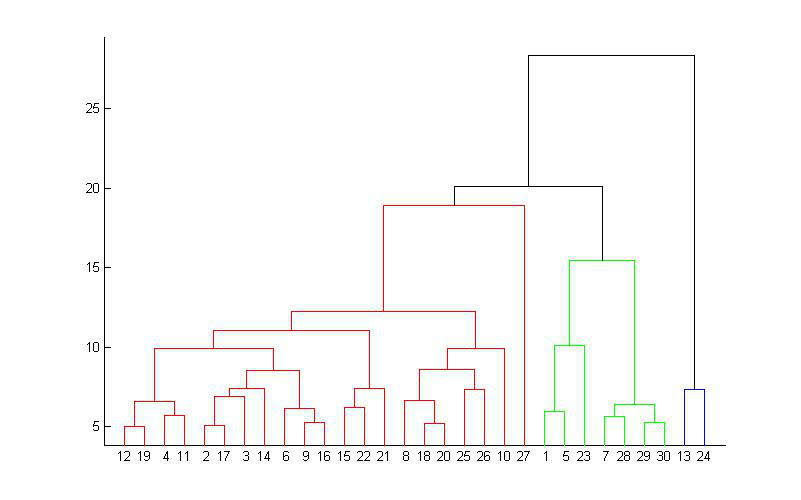
一开始每个数据点独自作为一个类,它们的距离就是这两个点之间的距离。而对于包含不止一个数据点的 cluster,就可以选择多种方法了。最常用的,就是average-linkage,即计算两个cluster各自数据点的两两距离的平均值。类似的 还有single-linkage/complete-linkage,选择两个cluster中距离最短/最长的一对数据点的距离作为类的距离。
**层次聚类最大的优点**:它一次性地得到了整个聚类的过程,只要得到了上面那样的聚类树,想要分多少个cluster都可以直接根据树结构来得到结果,改变 cluster数目不需要再次计算数据点的归属。层次聚类的缺点是计算量比较大,因为要每次都要计算多个cluster内所有数据点的两两距离。另外,由于层次聚类使用的是贪心算法,得到的显然只是局域最优,不一定就是全局最优。
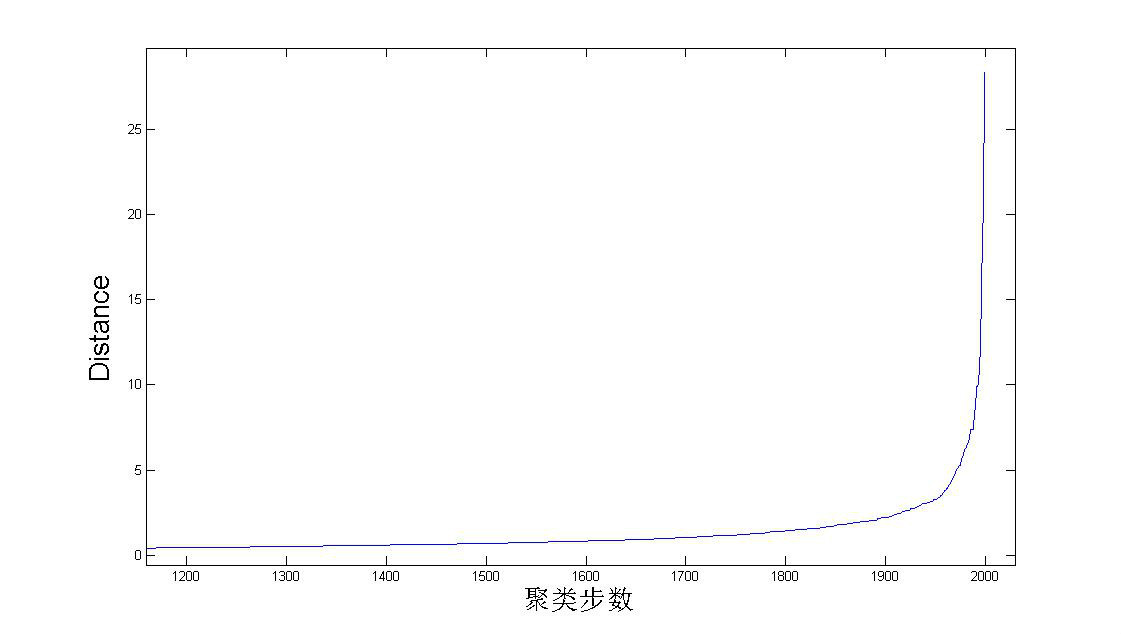
**确定最优cluster数的方法**:可以根据聚类过程中,每次合并的两个cluster的距离来作大概判断,如下图。因为总共有2000个数据点,每次合并两个cluster,所以总共要做2000次合并,从图中可以看到在后期合并的两个cluster的距离会有一个陡增。**现实情况下可能没有这么明显**
 ### 参数
AgglomerativeClustering(n_clusters=2, affinity='euclidean', memory=Memory(cachedir=None), connectivity=None, compute_full_tree='auto', linkage='ward', pooling_func=)
Recursively merges the pair of clusters that minimally increases a given linkage distance.
通过最小距离,递归的将新的元素加入到现有的聚类结果中
**属于分层聚类的一种算法**
1. n_clusters : int, default=2
The number of clusters to find.
聚类的数量
2. connectivity : array-like or callable, optional
Connectivity matrix. Defines for each sample the neighboring samples following a given structure of the data. This can be a connectivity matrix itself or a callable that transforms the data into a connectivity matrix, such as derived from kneighbors_graph. Default is None, i.e, the hierarchical clustering algorithm is unstructured.
连接矩阵
3. affinity : string or callable, default: “euclidean”
距离计算方式,如欧式距离、L2、L1
4. memory : Instance of joblib.Memory or string (optional)
用于缓存树的结果输出,输入为路径字符串,当设定为空值时,结果树将不被储存
5. compute_full_tree : bool or ‘auto’ (optional)
用于控制是否计算整棵树,可有效减少计算时间。
6. linkage : {“ward”, “complete”, “average”}, optional, default: “ward”
用于控制距离的比较方式
ward :以最小方差作为判断标准
average:以cluster内各点到新点距离的平均值为判断标准
complete:以最大距离作为判断标准
7. pooling_func : callable, default=np.mean
用于控制将多个变量合并为一个变量
### 属性
1. labels_ : array [n_samples]
每个样本的标签
2. n_leaves_ : int
结果树中叶节点的数量
3. n_components_ : int
结果中cluster的数量
4. children_ : array-like, shape (n_nodes-1, 2)
每个非叶节点的子节点的数量
### 方法
1. fit(X[, y]) Fit the hierarchical clustering on the data
输入数据,进行分层聚类运算
2. fit_predict(X[, y]) Performs clustering on X and returns cluster labels.
输入数据X,并输出其标签
3. get_params([deep]) Get parameters for this estimator.
返回模型的参数
4. set_params(\*\*params) Set the parameters of this estimator.
设置模型的参数