Vermont Public Health in Focus

Vermont Public Health in Focus highlights the work of your Health Department, both behind the scenes and in the field, by providing examples of how public health benefits entire communities by supporting the mental, physical, and social well-being of everyone in Vermont. Thank you for standing with us and supporting the work we do. 


In this month’s issue, we’re taking a closer look at how the Burlington Local Health Office supports students in their area and how we monitor for mosquito-borne viruses in Vermont.


See last month's edition here.

Missing School Impacts More Than Grades

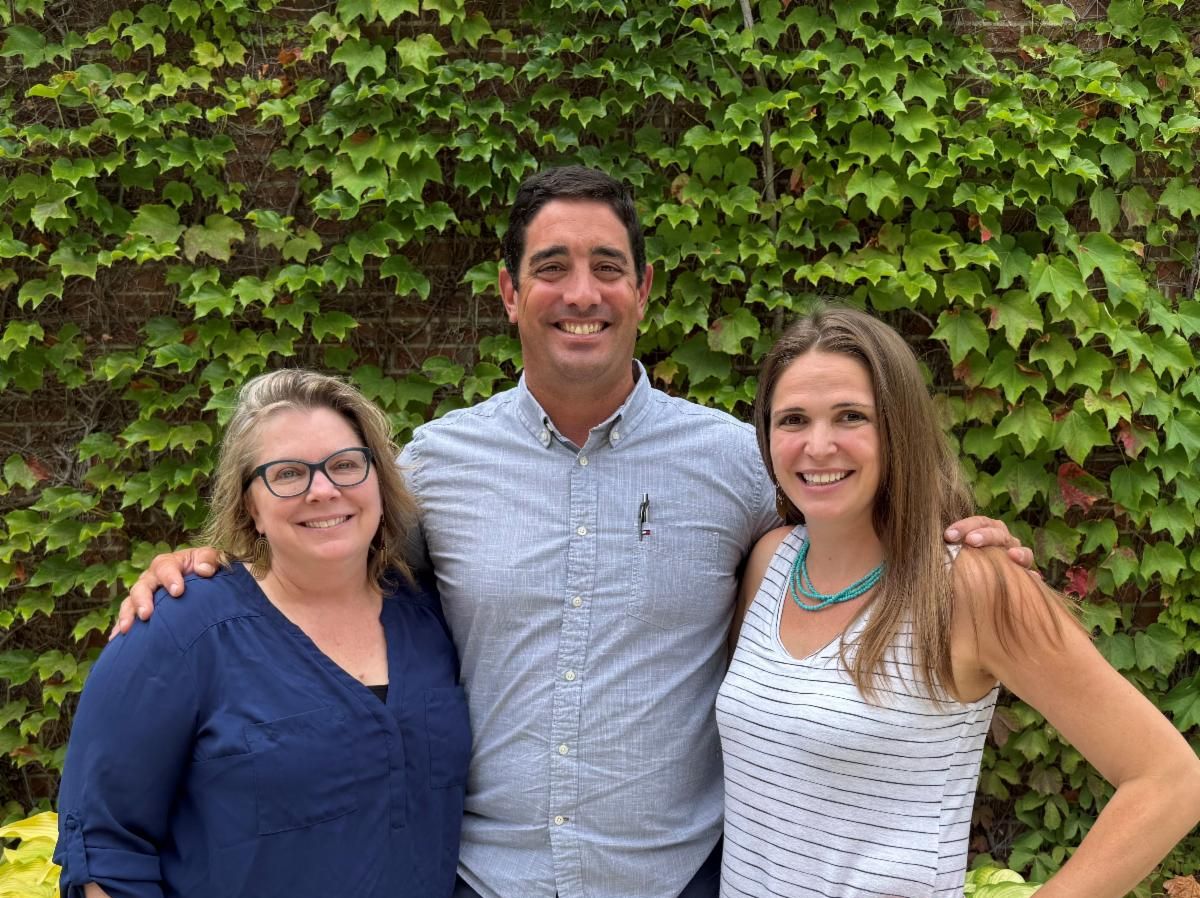
CHS and VDH Pilot Program Team

From left to right: Jess LaClair (Health Department), Andrew Conforti and Chelsea Lareau (Colchester High School)

The Public Health Impact of Chronic Absence


Missing school here and there might not seem like a big deal, but frequent absences, or chronic absenteeism (missing about 18 or more days of school during the school year), can have harmful and lasting effects on students. Students can fall behind in their learning, slow their class’s progress and miss out on support systems—like free healthy meals, mental health services and a safe place to connect with friends and trusted adults. It also increases the risk of not earning a high school diploma, which is associated with increased mortality, lower life expectancy, greater likelihood of involvement with the criminal justice system and long-term health challenges. 


One School’s Solution 


Chronic absenteeism is often a sign of bigger challenges that students may be facing, so addressing it requires compassionate solutions. That was the goal of Colchester High School’s Success Mentor Pilot Project, a collaborative project with the Colchester School District's Chelsea Lareau, Colchester High School’s Volunteer Attendance Committee, and our own Jessica LaClair from the Burlington Local Health Office.  


The project paired chronically absent students with volunteer staff mentors who they already knew. Mentors regularly checked in with students and their families — not just when students were absent, but also when they had successes.

The Pilot Program worked! During the pilot period, school attendance for many of the students in the program dramatically improved. The program will continue into the next school year, with hopes of the same positive outcomes. 


As Colchester High School principal, Andrew Conforti, puts it, "I am very excited to dedicate time for our staff to adopt the strategies implemented in the pilot because I truly believe this will make a difference. If we can replicate a fraction of the success we saw in the data from the pilot group on a larger scale, I am hopeful we will have positive impacts for a wide range of students and families."


To Sum it Up 


Chronic absenteeism is a complex problem that requires several strategies working together to address it. The success mentor model is one strategy worth bringing to more schools across Vermont, so every student has someone looking out for them. Keeping kids in school isn’t just about academic success, it’s about their health, their future and the strength of our communities. 

Jess LeClair


This article was written in collaboration with Jessica LaClair, public health specialist/school liaison at the Burlington Local Health Office


Jessica LaClair

The Latest in Public Health

Testing mosquitoes for viruses 


Vermont is a great place to be in the summer – unfortunately, mosquitoes agree.


Every week during the summer months, the Vermont Agency of Agriculture collects mosquito pools from traps located across the state. Mosquito pools are groups of 1-50 mosquitoes of the same species from the same trap location and date.


The mosquitoes are then tested at our Public Health Laboratory in Colchester for Eastern equine encephalitis virus (EEE), West Nile virus and (new this year) Jamestown Canyon virus. This season, as of August 1, 2025, two viruses have been detected in mosquitoes that cause disease: West Nile virus in St. Albans and Jamestown Canyon virus in Rutland.


There are over 100 trap sites in more than 80 towns that help us track mosquito activity across the state. We don’t share exact locations of the trap sites since most of them are on private property. Mosquito traps are placed in areas where the risk for mosquito-borne viruses is higher, including:

·       Areas where mosquitoes have tested positive for viruses in the past.

·       Swampy areas with certain trees (like maple, cedar or alder).

·       Places with lots of birds or along bird migration paths.

·       Communities with more people.

·       Locations where people or animals have gotten sick before.


We asked State Public Health Veterinarian at the Health Department, Dr. Natalie Kwit, DVM, MPH, DACVPM, and Patti Casey, Environmental Surveillance Program Supervisor at the Vermont Agency of Agriculture, to answer some common questions we get about mosquitoes.


Dr. Kwit leads the Zoonotic and Vector-Borne Disease Programs and enjoys spending time outside with her family, watching horror movies, cooking and singing karaoke. 

Patti Casey


Patti Casey leads the Environmental Surveillance Program for the VT Agency of Agriculture. When not chasing mosquitoes and ticks, she can be heard making music around New England.


What are my chances of getting sick if infected mosquitoes are found nearby?


Your chance of getting sick depends on many things, so it's difficult to know exact risk, but most people who are infected with EEE or West Nile viruses won’t develop any symptoms. Older people and those with certain medical conditions or weakened immune systems are at higher risk of getting very sick. Everyone should protect themselves from mosquito bites, especially when mosquitoes test positive for a virus in your area.


How can I know if I’m sick with a mosquito-borne illness? 


Most mosquito-borne illnesses start with symptoms like fever, headache, body aches, or fatigue. Some people may also have nausea, joint pain or a rash. People with severe symptoms like stiff neck, confusion, trouble speaking or seizures should seek immediate medical care.


Am I at risk if mosquitoes test positive for viruses in nearby towns but not where I live?


Yes, since mosquitoes can fly within 5-10 miles of where they hatch, people and animals in neighboring towns may be at risk. Stay up to date by checking out our regularly updated EEE risk map.

What does the State do when mosquito-borne viruses are detected?


The Health Department informs the public by notifying local health officials, issuing press releases, sharing on social media and posting weekly test results on our website.


Spraying large areas with chemical treatments to kill mosquitoes is only considered when virus levels in mosquitoes pose a serious health risk. Before making that decision, several other factors are also considered—such as the weather, temperature, time of year, environmental conditions (like sensitive habitats and land use) and public input. The planning process includes working with local officials, holding public meetings and notifying the community at least 24 hours before any spraying takes place.

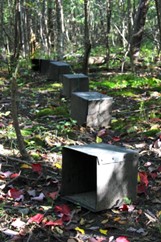
Resting box traps target Culiseta melanura, the main vector of EEE. These traps attract female mosquitoes that have already had a bloodmeal, who are looking for a dark and quiet place to digest and make their eggs.

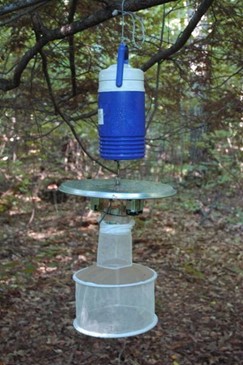
CDC Light Traps are used as a sensing tool to determine the mosquito species that are present in the area. Dry ice is used to attract the female mosquitoes.

CDC Light Traps are used as a sensing tool to determine the mosquito species that are in the area. Dry ice, which releases carbon dioxide, is used to attract female mosquitoes that are looking for a bloodmeal.

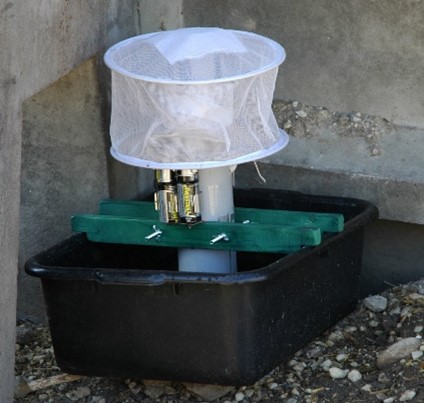
Gravid traps target Culex mosquitoes. Who are the main vector of WNV. This trap uses a tray of cow manure water that attracts female mosquitoes looking for a place to lay her eggs.

Gravid traps target Culex mosquitoes, the main vector of West Nile Virus. This trap uses a tray of cow manure water that attracts female mosquitoes looking for a place to lay eggs.

I want to learn more! Where can I go for more information?


·      Vermont Agency of Agriculture’s mosquito surveillance program 

·      Arbovirus Surveillance Plan

·      HealthVermont.gov/mosquito 

·      Specimen Analysis of Mosquito-Borne Viruses

In the Media

Check out these recent local news stories featuring subject-matter expert interviews and information provided by the Health Department.


Facebook  X  Instagram  LinkedIn  Email  YouTube  Web